Smoothie Packs

I have a confession – I don’t actually like eating fruit. I think this comes from not eating much as a kid, but also that I don’t really care for things that are very sweet. Even now if I have to sweeten anything, I only like a certain kind of sweetness. I’m a very picky sweets eater.

Since most fruits are pretty sweet, I avoid them. I’m more of a vegetable girl – I’d rather eat a plate full of broccoli than one filled with strawberries. With that being said, it is important to have some fruit in your diet so you can get the nutrients you need. This is where the almighty smoothie comes in.

I started making smoothie packs when I realized that:
A) Adding a lot of fruit to a blender produces way more than one serving of smoothie
B) I was wasting a lot of good food
C) I am not good at making decisions on what flavor of smoothie I want, so I would add a little of everything (which wasn’t very good)

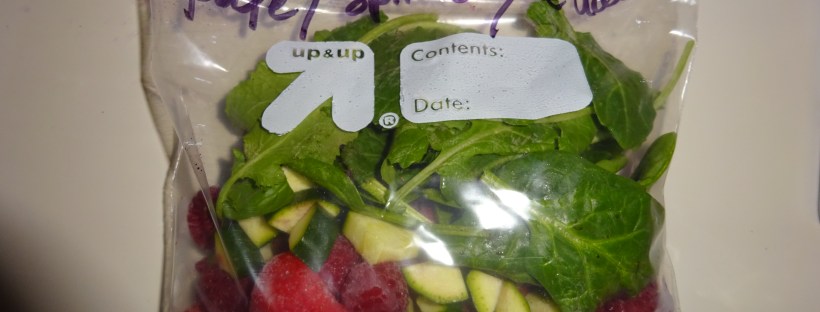
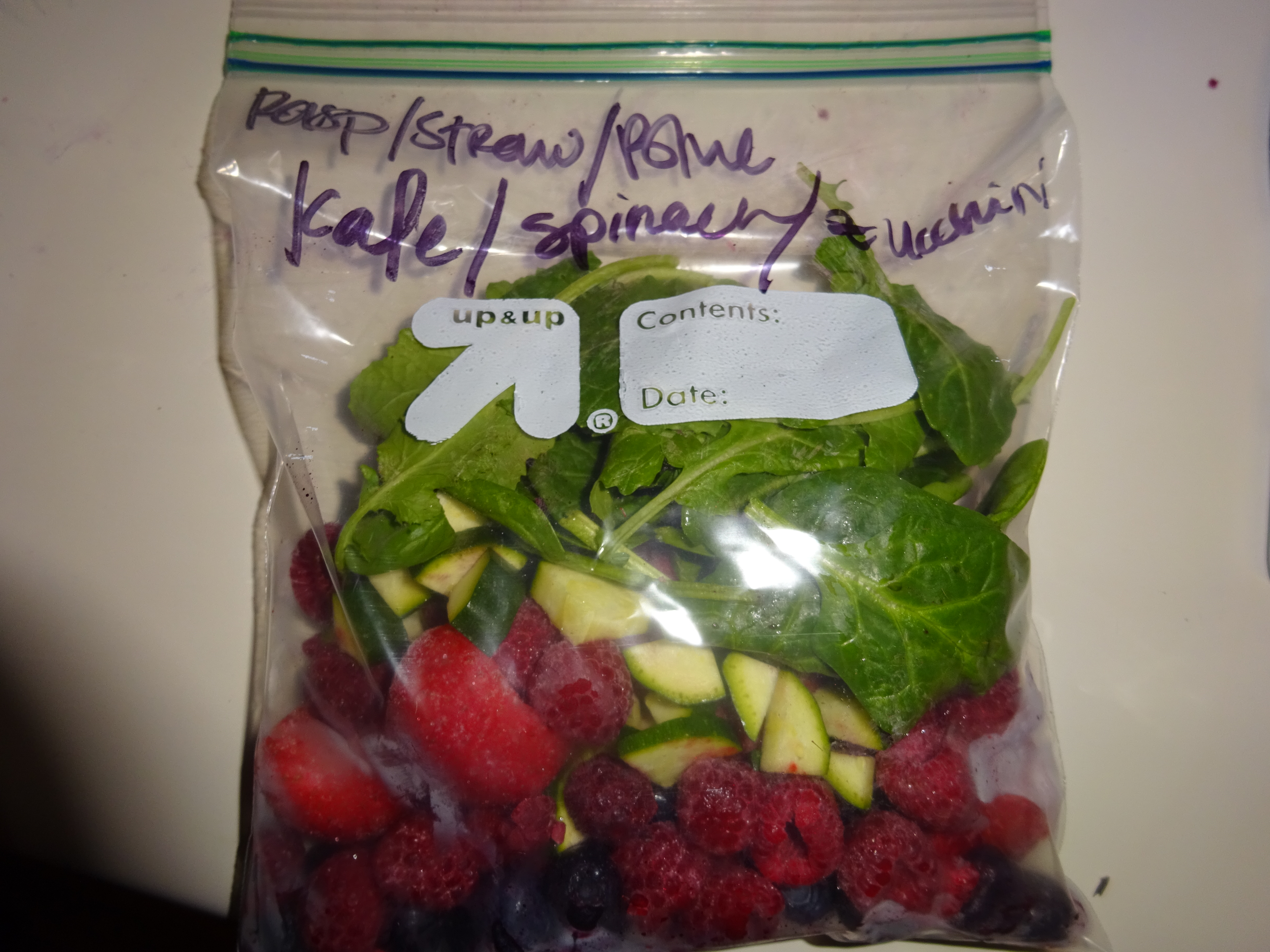
These nifty little packs just go in your freezer and are ready for you to use whenever you have a smoothie craving. Just add your liquids of choice – for me it’s plain unsweetened whole milk kefir, homemade nut milk, and green tea – and any nutrient boosters – I add chia seeds for a little boost and texture – and blend. It’s thoughtless, simple, and incredibly easy.

*Depending on how many of these you make is going to determine how much time it takes you to pack these.
*You’re going to need Ziploc bags. I used quart storage bags, but sandwich would work just as well.

Smoothie Packs
DSC00167
Ingredients
– Any frozen or fresh fruit of your choice. I typically stick to frozen berries, but it’s up to you. Get creative! Mango, melon, pineapple, banana – they would all be good choices!
– Leafy greens, such as spinach and/or kale. You’ll see in the pictures I also use some zucchini. Actually a very good smoothie addition if you’ve never tried it.

Method
DSC00163
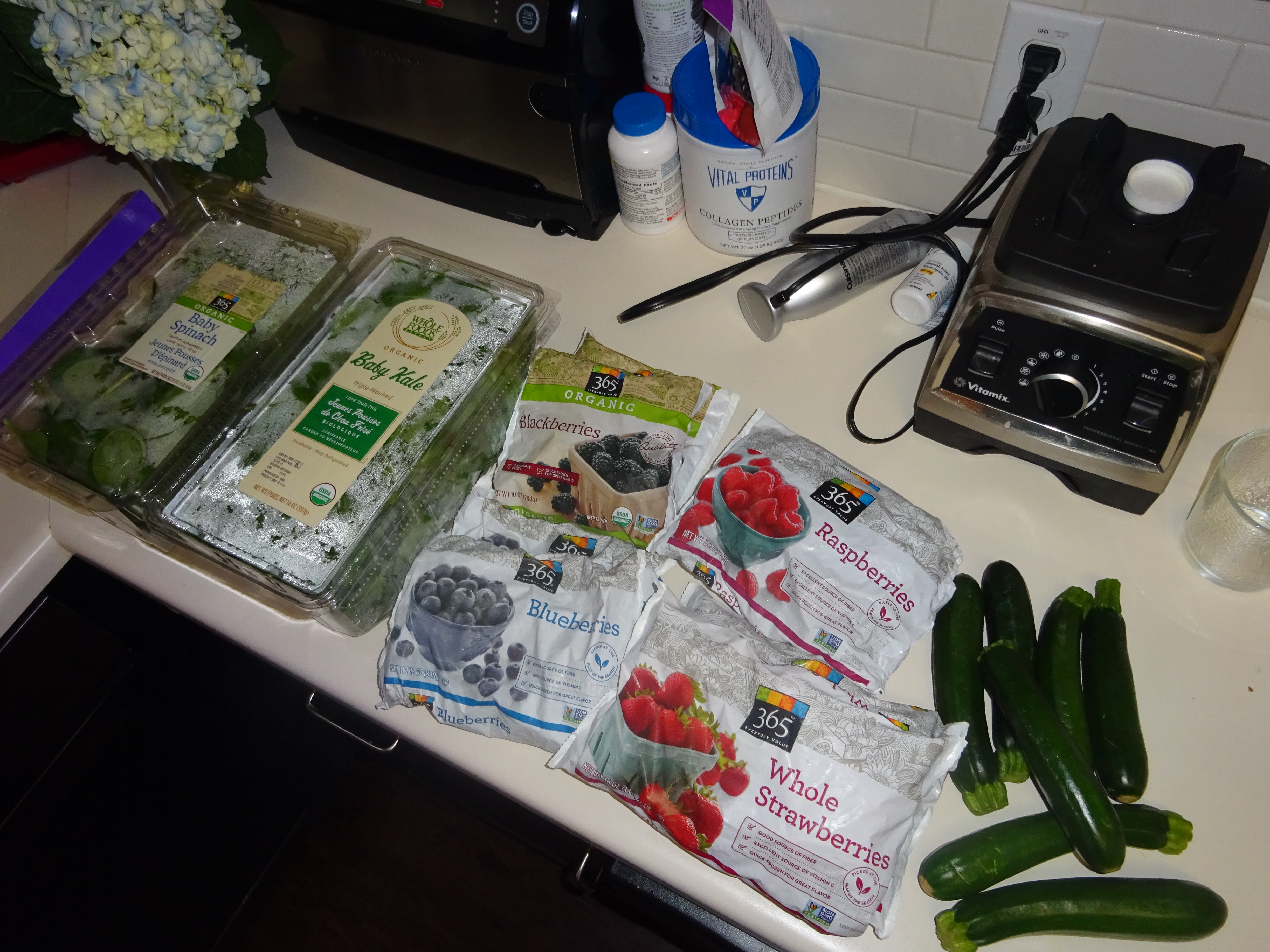
^^^This was my assembly line before cutting the zucchini.
– Prepare your fruits and vegetables. If you have fresh fruits and vegetables, wash and cut them accordingly. For bigger fruits and veggies, I’d try and cut them into pretty small pieces. This is what my zucchini looked like after cutting.
– Lay out all your ingredients like in the above picture.
– Assemble your bags. It’s fun to mix it up a little. One bag with strawberry and blueberry, the next with raspberry and blackberry. Just be sure to always add a leafy green or vegetable. Or both, because you love nutrition.
– Zip up the bag, label it, and place it in the freezer.
– Repeat all steps until you’re out of ingredients.

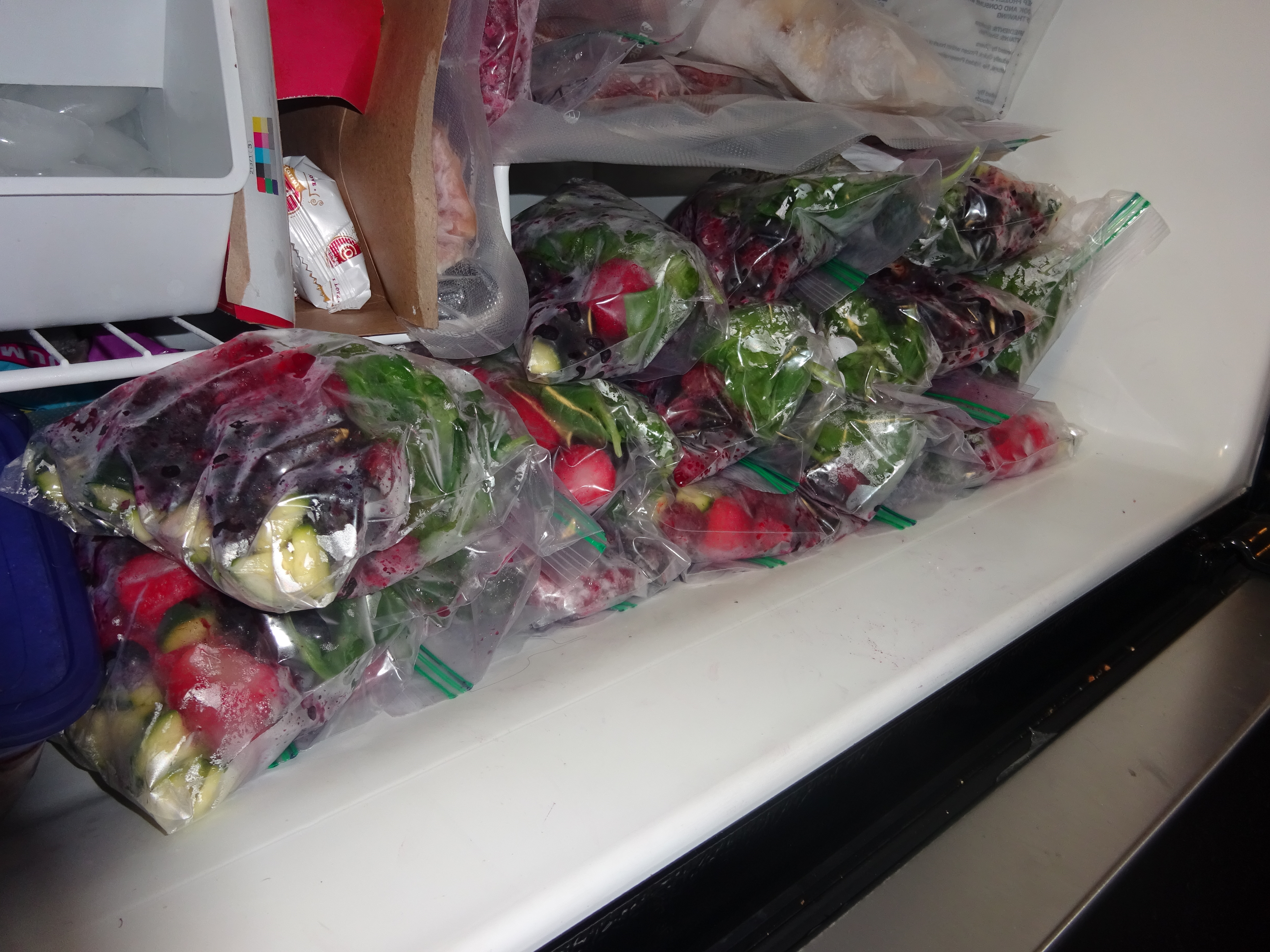
That’s it! It’s super simple! This is also a great way to meal prep. I ended up making about 24 of these smoothie packs from buying 2 bags of each frozen fruit, the large tubs of spinach and kale, and the small zucchinis. This will last me for awhile and is something I don’t have to do often – which is great. This is what my freezer looks like after placing all the packs in there.
DSC00171

Hope this helps some of y’all out! I know being a busy college student this has helped me out tremendously!

Keep it healthy!
xoxo,
Paige
Spaghetti Squash

When I first started living a grain-free life, the one thing I knew I would miss would be pasta – particularly noodles. There’s something so calming about twirling some spaghetti around a fork. However, after a lot of research I found I could use zucchini’s as noodles. They filled the void until I finally broke down and tried spaghetti squash.

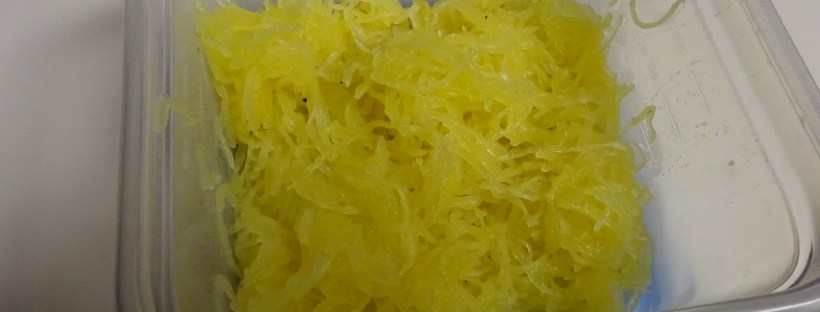
Spaghetti squash takes grain-free pasta dishes to a whole new level. Very neutral in flavor, these noodles remind me of angel hair pasta (though it’s been awhile since I’ve had real angel hair pasta, but oh well).

Use this as a replacement for noodles in a variety of Italian inspired pasta dishes, such as my Seafood Alfredo.

This should take about 30-40 min to cook, and prep time isn’t too long. Anywhere from 5-10 min. It’s great to prepare this on a Sunday so it’s ready to use throughout the week (or whatever day you have available).

Spaghetti Squash
DSC00176
Ingredients
– Spaghetti Squash
– 1-2 tablespoons of butter or ghee, melted (feel free to use your favorite oil, sometimes I’ll use avocado)
– Salt and pepper

Method
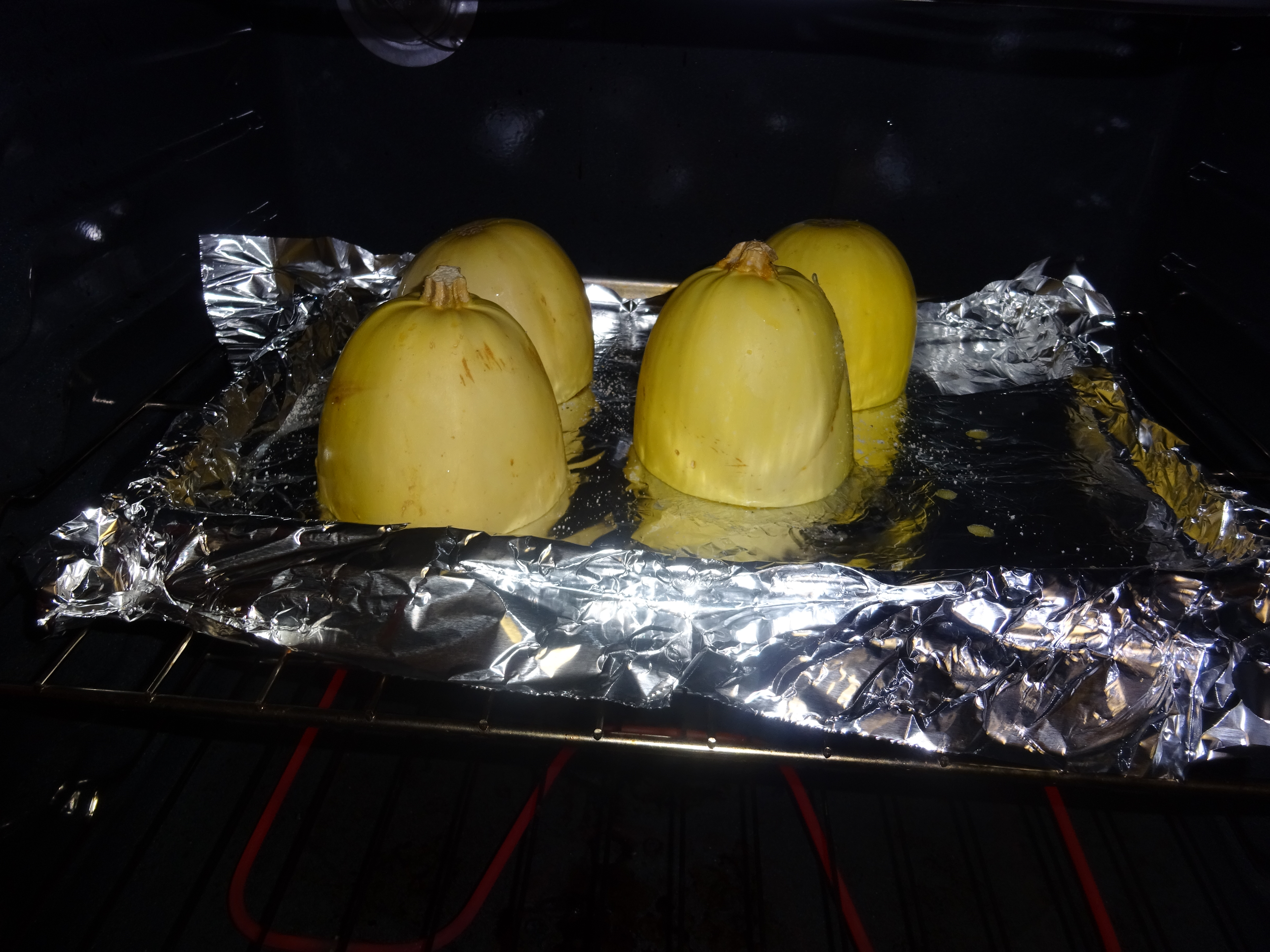
– Preheat your oven. This is tricky for me because I have an oven that I’ve got to set pretty high. I preheated mine to 415 degrees.
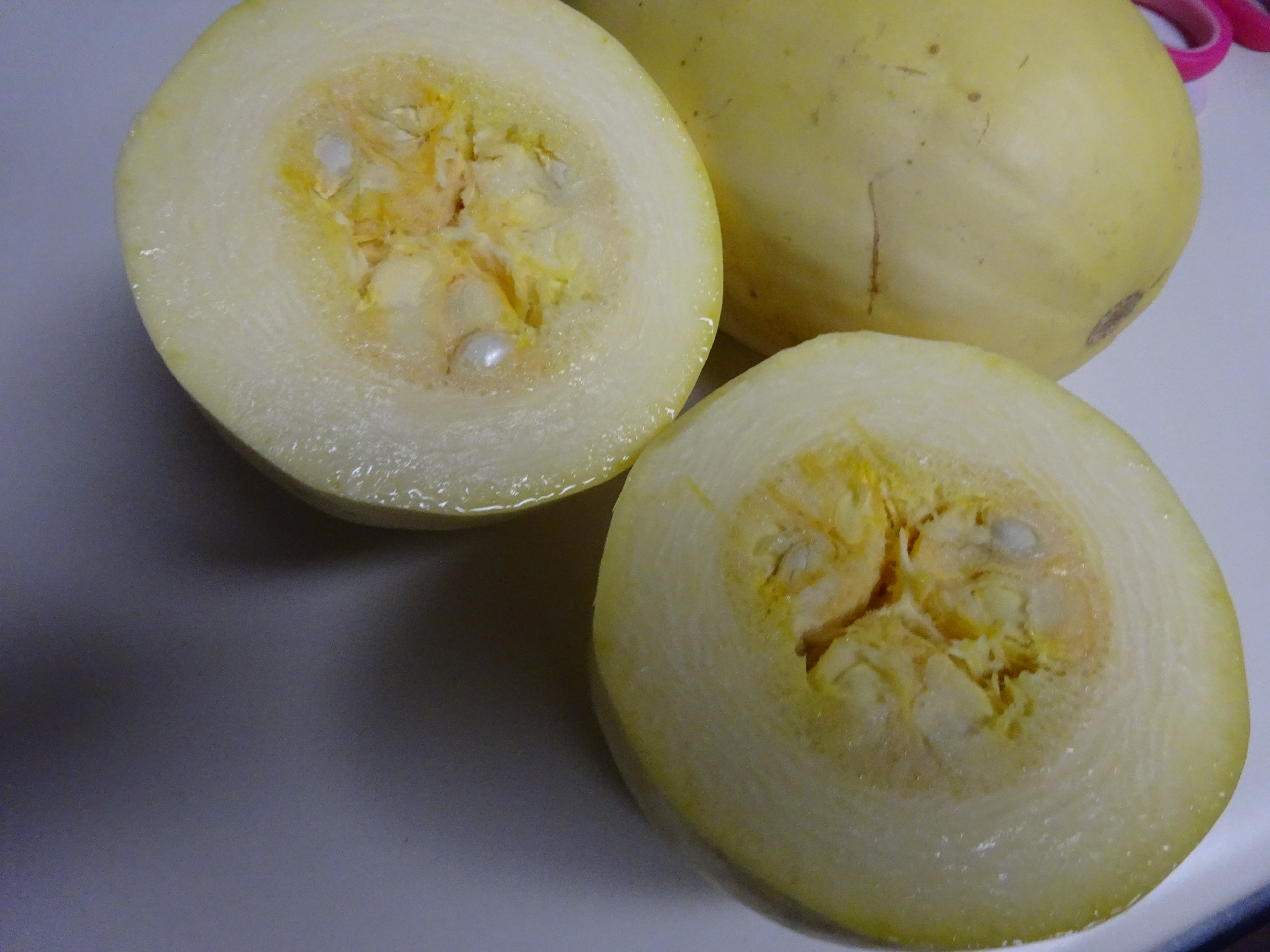
– Take the squash and cut it width wise. You could cut it length wise, but trust me – width is easier.
DSC00156
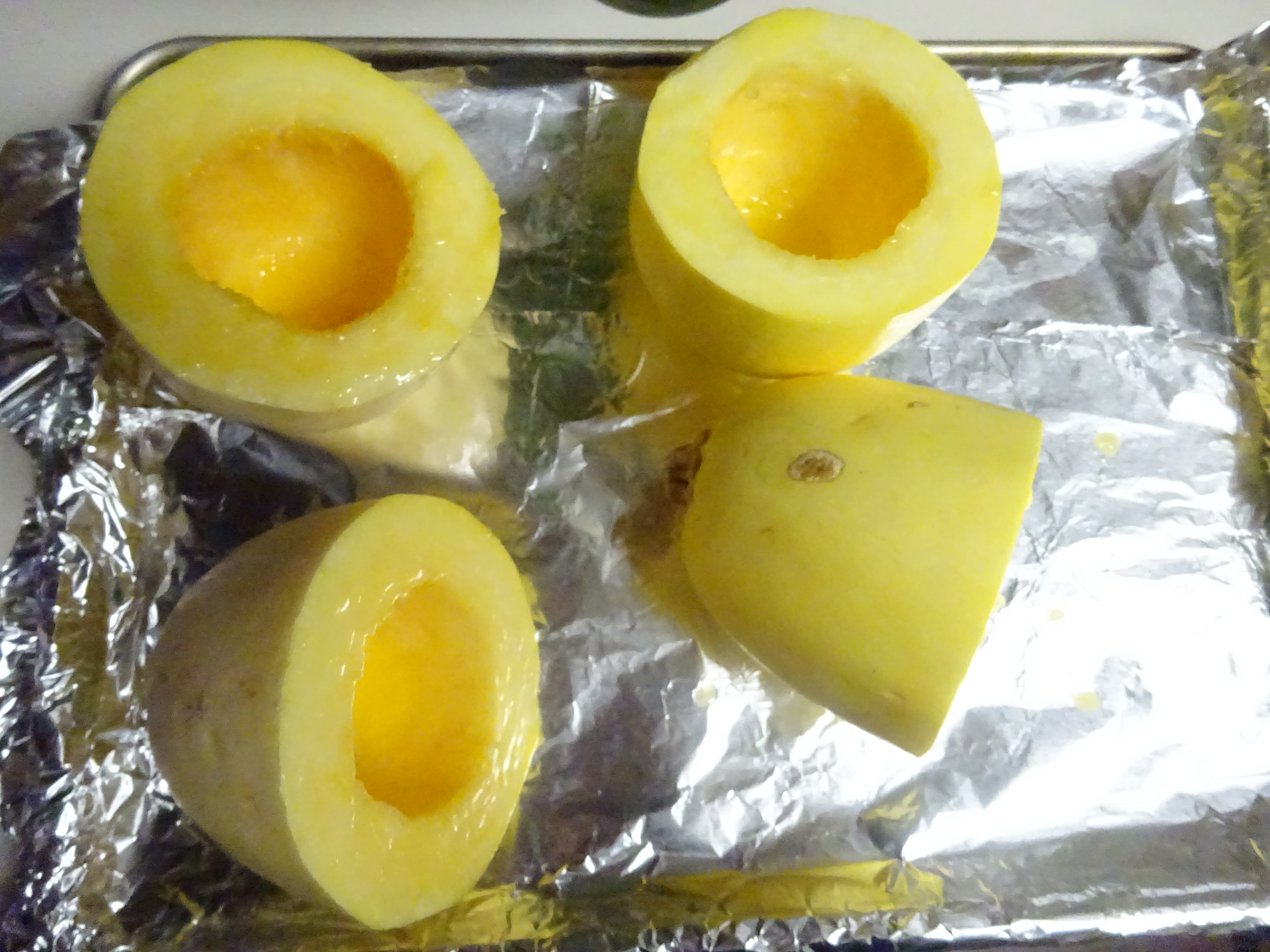
-Clean out the seeds and discard the waste so your squash looks like this
DSC00158
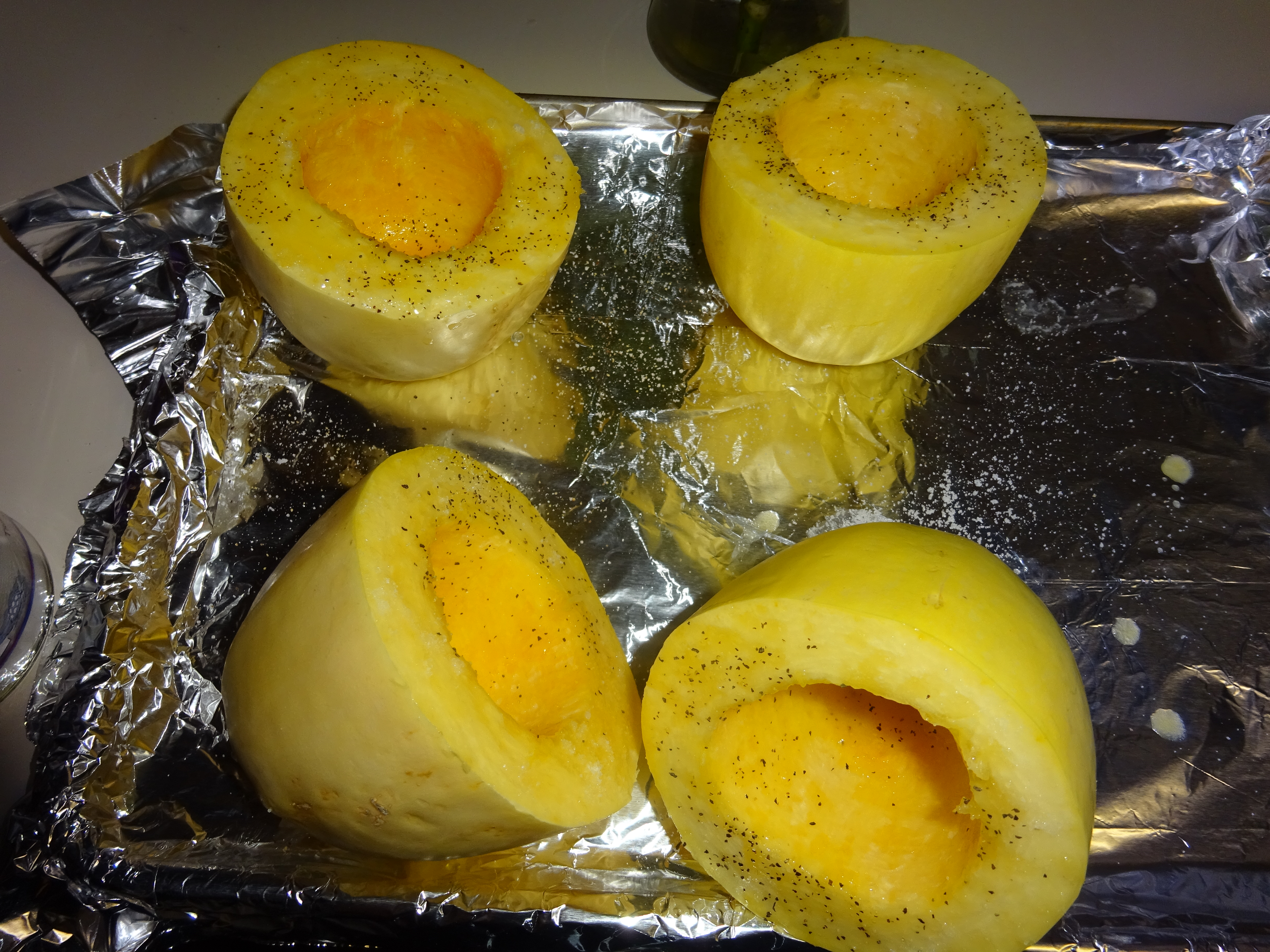
– Melt the butter and coat the the meat of the squash. I used two squash’s and needed 2 tablespoons of butter. Mine were somewhat smaller than some I’ve seen. Once oiled, sprinkle with salt and pepper.
DSC00160
– Once the oven is preheated, place the spaghetti squash face down on a cooking sheet covered in foil (you’ll thank me for that) and let cook about 30-40</>min.
DSC00161
– After your timer has dinged, take the squash out and make sure the squash is tender to the touch. They’re going to be hot, but you should be able to poke and see. If not tender, let cook another 5 min. Let the squash cool.
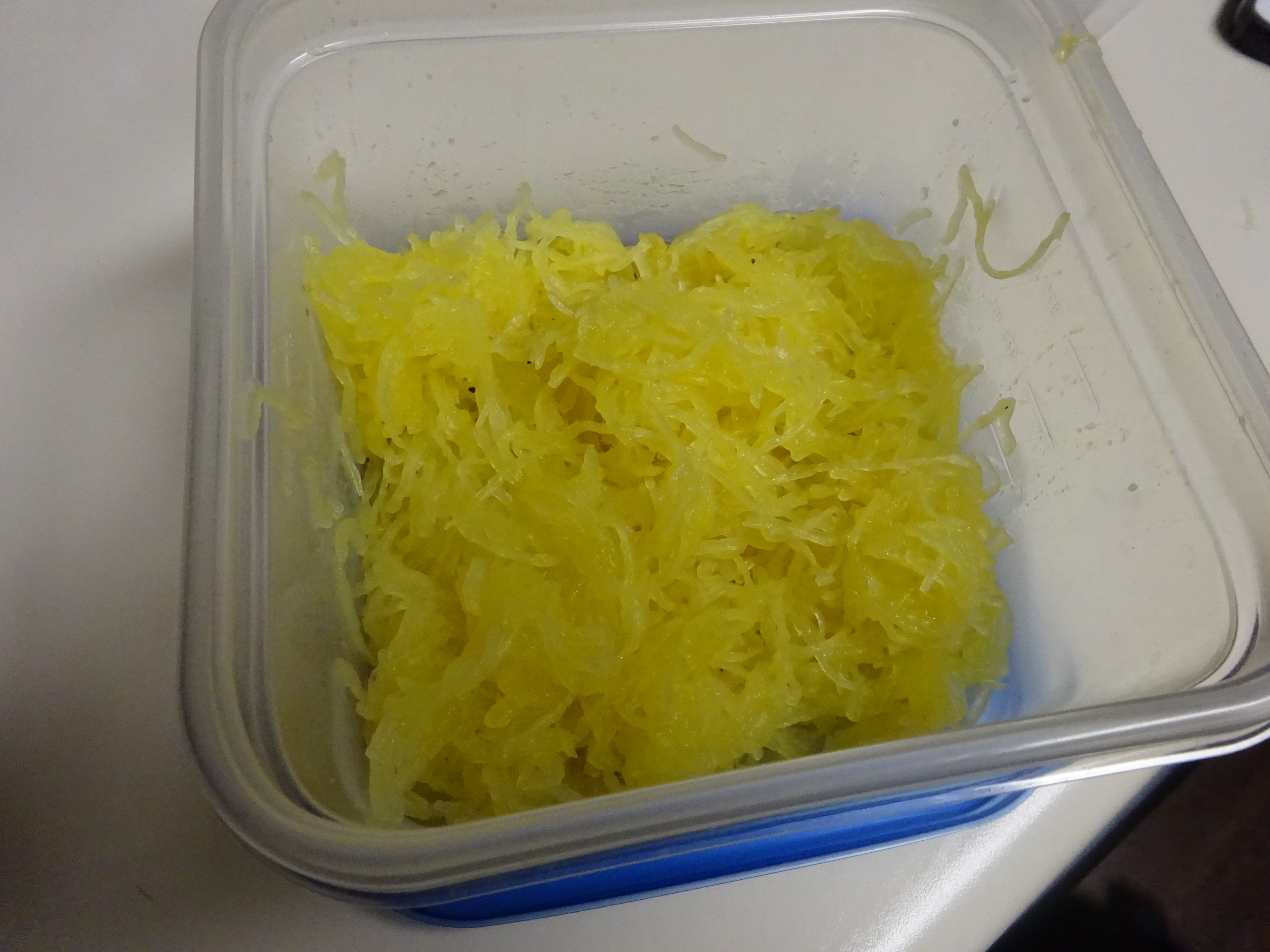
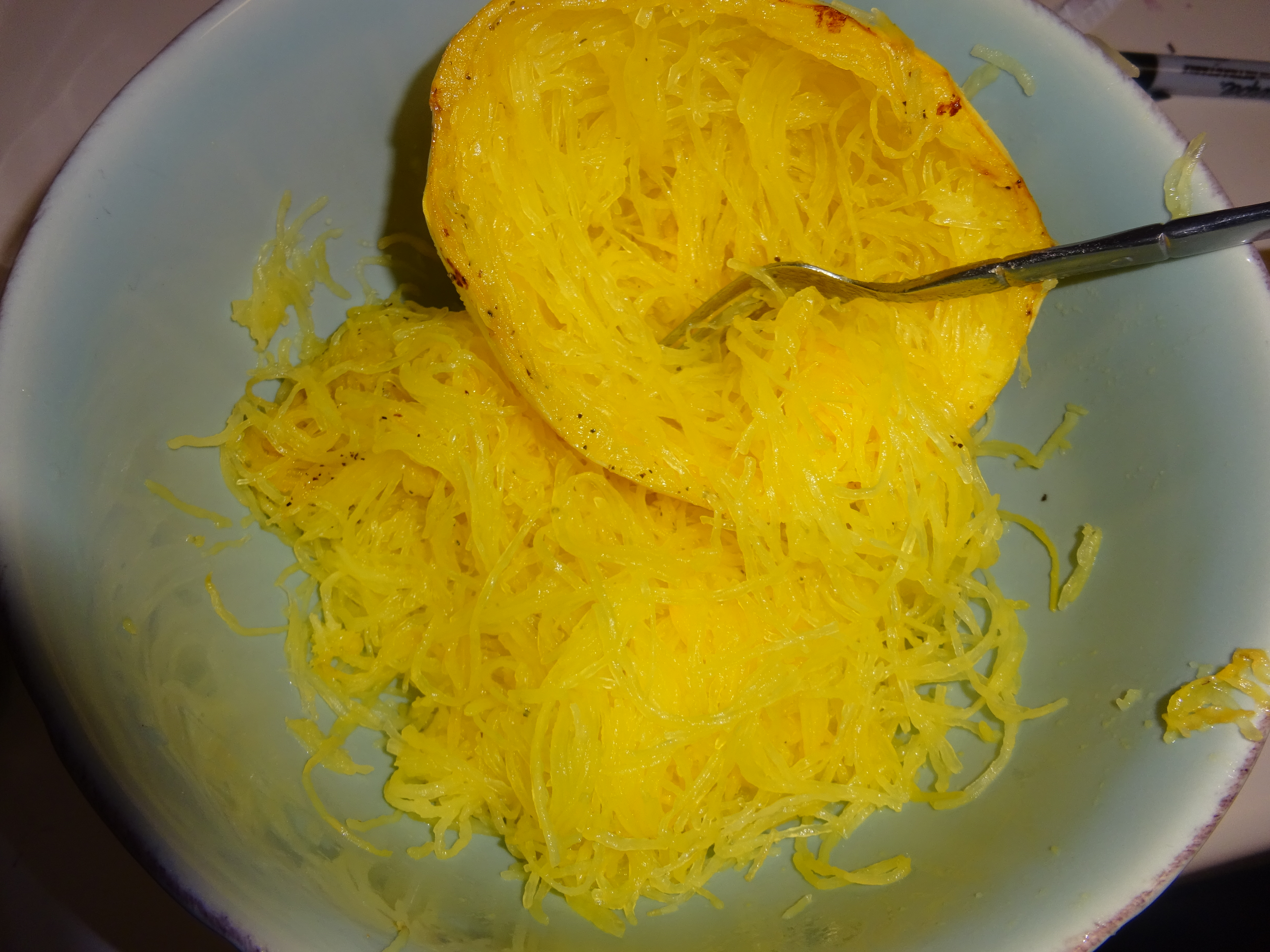
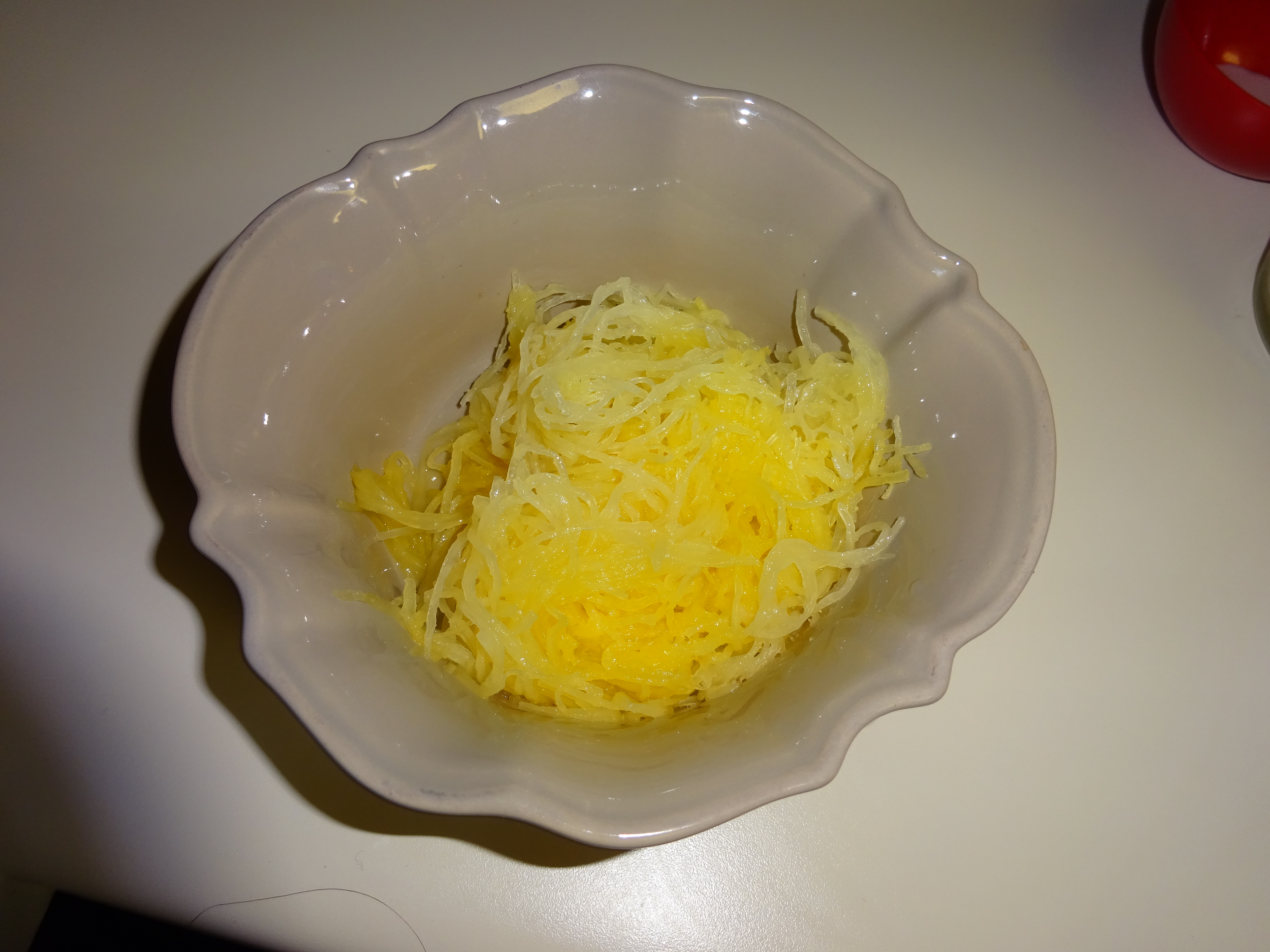
– Once cooled, it’s time to get the meat out! Using a fork, scrape the squash into a bowl. It will come out like spaghetti noodles!
DSC00174
– Place your prepared squash in airtight containers and enjoy! This should last for about a week in the fridge.

Enjoy! If you haven’t discovered the greatness of spaghetti squash, let me know how you like it!

xoxo,
Paige

Seafood Alfredo Over Spaghetti Squash

Living this lifestyle has a lot of ups and downs. For starters, I can’t enjoy a lot of the foods that I once indulged in. Humor me for a second and hear this – growing up in a small town one restaurant stood above all the rest and that place was the Olive Garden. When my Mom and I would go out of town to the big city (Houston!), we always had to stop at Olive Garden, it was like our thing. Once this holy grail of a restaurant came to our town, Houston wasn’t as glamorous and I remember thinking, “where are we going to eat now?” Don’t worry, we supplemented with the Cheesecake Factory.

With that being stated, I absolutely love Italian. When I visited Italy in high school, I was in food heaven. However, Italian food isn’t necessarily all too kind to the gluten-free diet and even less friendly to the paleo diet. So long, creamy Alfredo and noodles.

That is, until now.

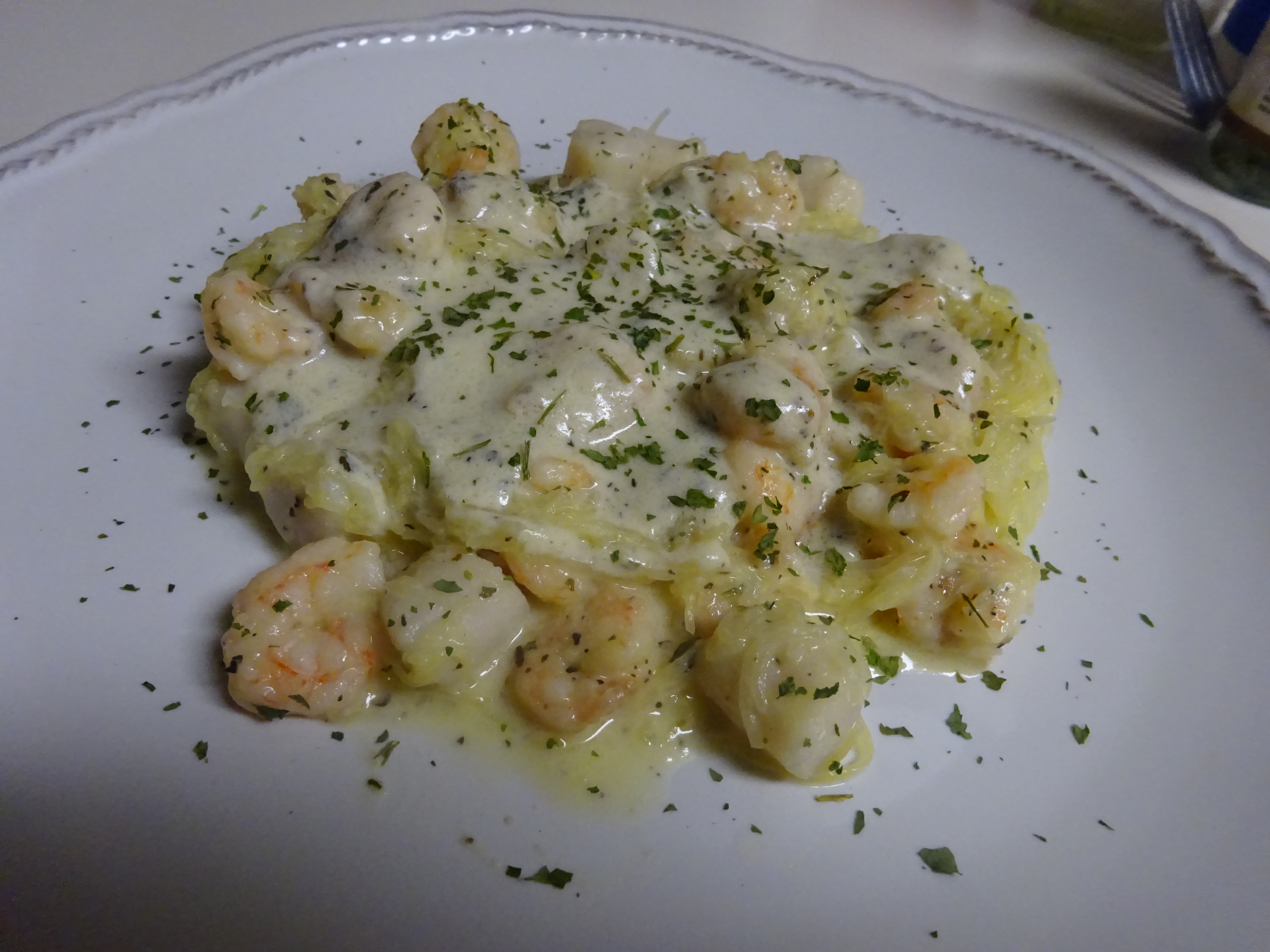
I have found a wonderful replacement for traditional Alfredo sauce. It’s everything I wanted it to be and more. It comes out rich and creamy and is perfect with shrimp and scallops over spaghetti squash. I hope you’re as amazed as I was.

*I cannot tolerate certain dairy products. Cheese, butter, and yogurt are okay for me, but I cannot handle heavy cream, half and half, or just plain ol’ milk. Feel free to use heavy cream in this, as well as cheese. I have omitted the cheese in the version I made since, honestly, you don’t really need it. But hey, a little cheese never hurt.

The sauce will serve about 2 people. If you need to serve more, double the recipe.

ALSO THIS IS SO IMPORTANT: As you are cooking this sauce be sure you are tasting it throughout the cooking process. Your taste buds are your biggest asset in the kitchen. If you don’t think there’s enough basil, add more basil. Not enough garlic, add more garlic. Not enough butter or ghee, add more butter or ghee. You get the idea. These are rough measurements and your pallet might not be the same as mine. You will benefit greatly by tasting the sauce as you go. Plus, tasting stuff while you’re cooking it is really fun (for me, anyway).

Seafood Alfredo Over Spaghetti Squash
DSC00154
Ingredients
– Cooked spaghetti squash or zucchini noodles (I always have this stuff pre-made and ready to go in the fridge. I’ll post about my meal prep soon!)
– Enough shrimp and scallops for you and any guests, defrosted (*sigh* I live alone, so I just grab a handful of each from the freezer and that’s enough for me, just as an aside)
– 1 cup cashew milk or heavy cream
– 2-3 tablespoons of grass-fed butter or ghee, more for cooking the shrimp and scallops
– 1/2 to 1 teaspoon dried basil
– 2 to 3 teaspoons of garlic powder (more or less, depending on how much you like garlic)
– a few pinches of dried parsley
– 1 1/2 teaspoons onion powder
– salt and pepper to taste
– raw cheese if that’s your thing

Method
– If using frozen shrimp and scallops, make sure they have been properly defrosted and set aside.
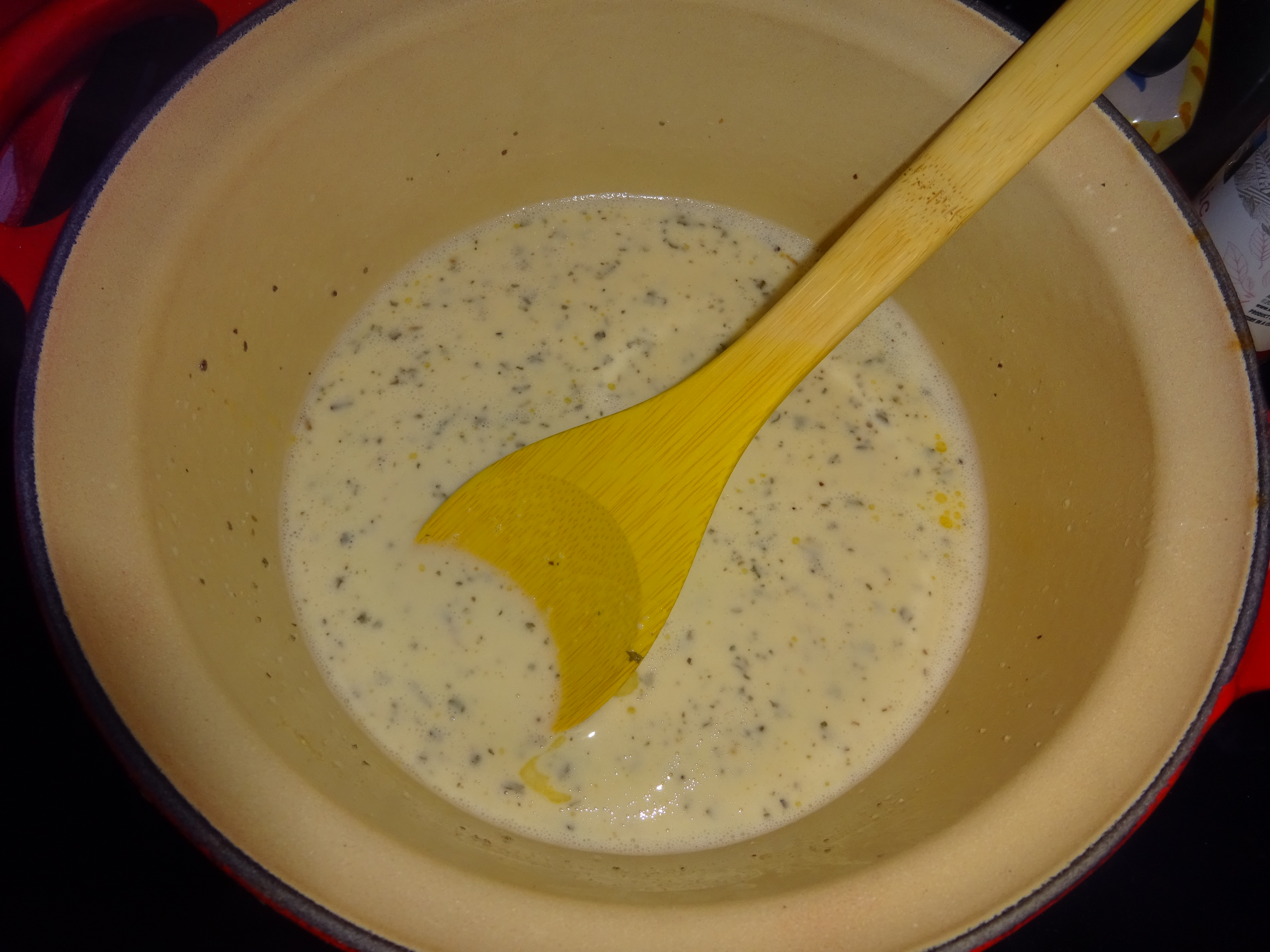
– Over low-medium heat, add the cashew milk and spices into a pot and let come to a simmer, stirring occasionally.
DSC00139
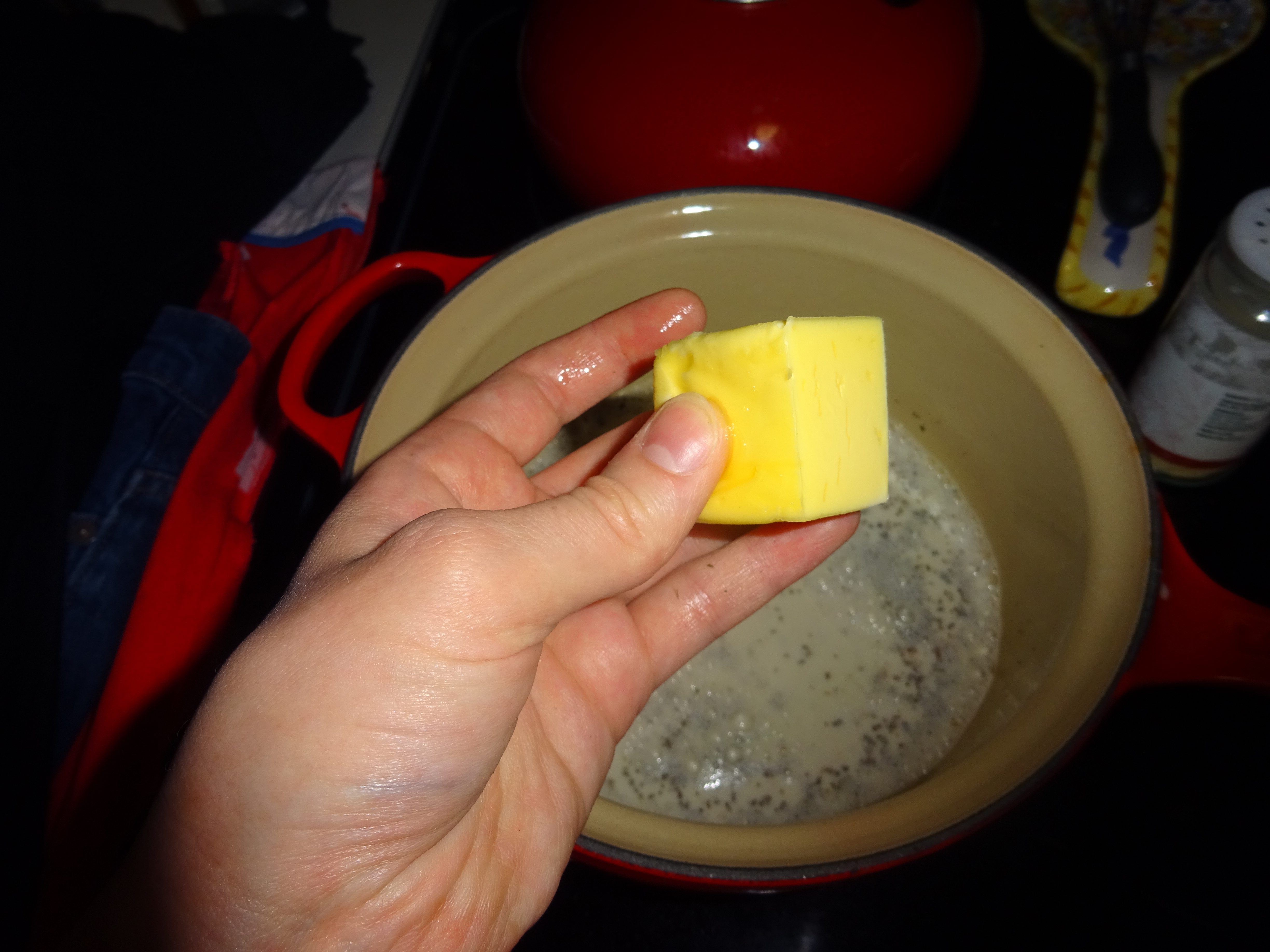
– Once the sauce is warm, add the butter. For visuals, this is how much butter I used. Kerrygold isn’t very kind and doesn’t have nice sticks, so I have to cut the brick in half to make my own.
DSC00137
– Allow the butter to melt and incorporate it into the sauce. Keep the sauce at the directed heat and let sit uncovered, checking to make sure it’s thickening, but doesn’t start to bubble.
– While your sauce is cooking, heat a pan and add either butter or ghee.
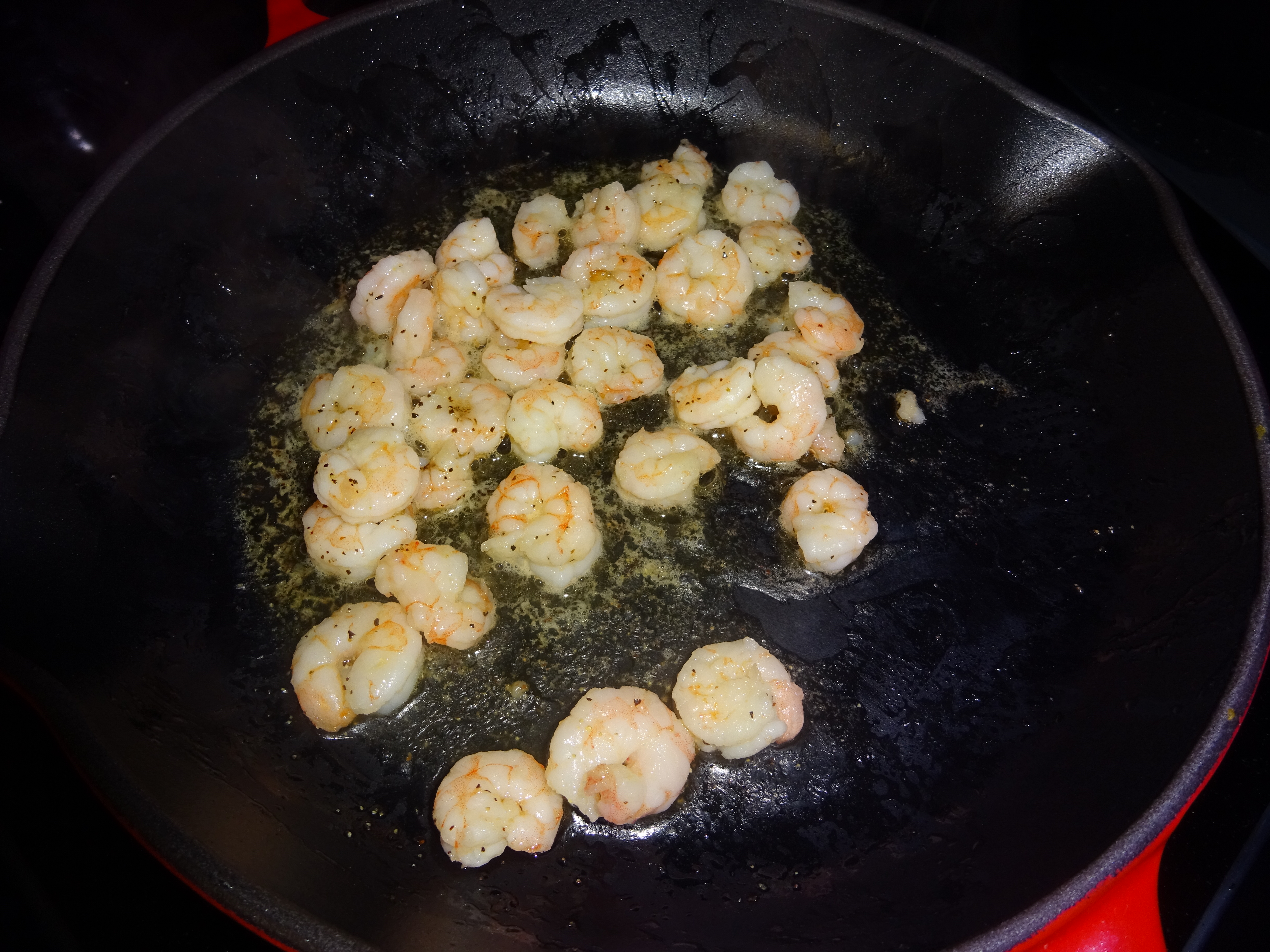
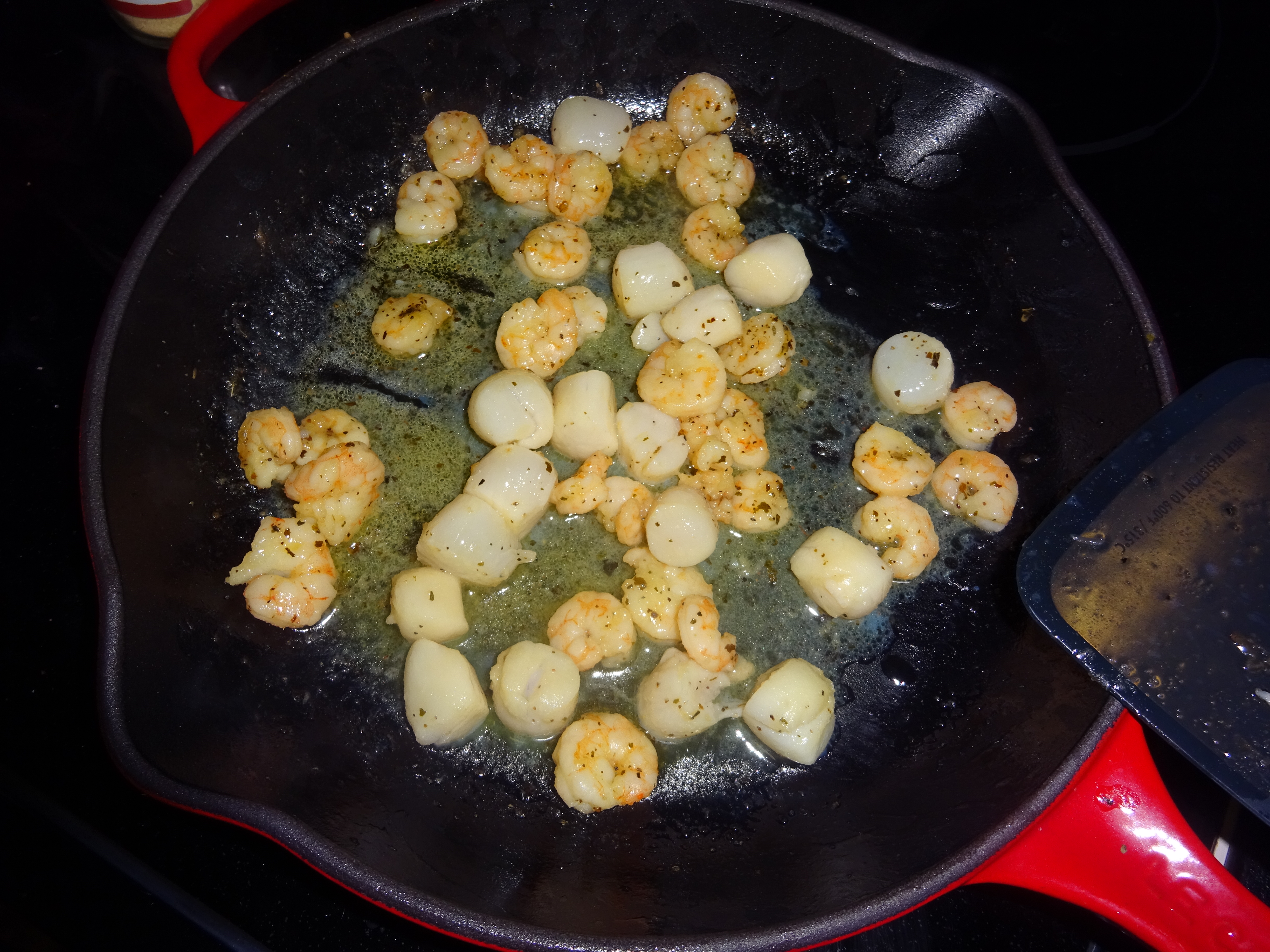
– Cook the shrimp until they are pink, seasoning with salt and pepper.
DSC00135
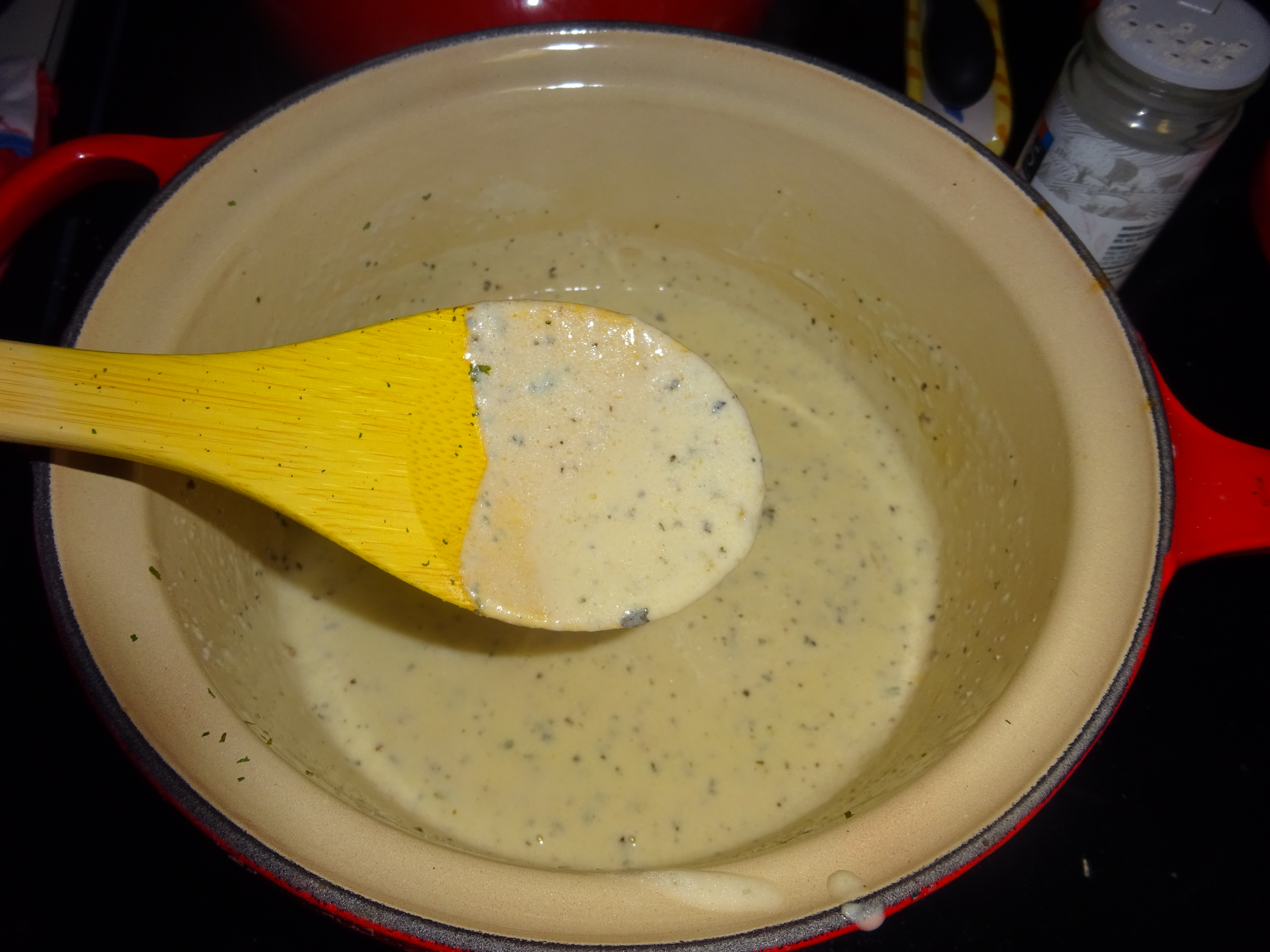
– As your shrimp is cooking, you should notice that the sauce is thickening up nicely. It’ll look like this. If it isn’t very thick, just let it cook a bit longer. Trust me, it will thicken up.
DSC00149
– In the final moments, add the scallops in the pan with the shrimp, coating with the oil used.
DSC00141
– Take your pre-cooked spaghetti squash because you’re a master meal-prepper and heat it for about 2 min in the microwave. This is as much as I used for myself, it was a pretty big serving.
DSC00143
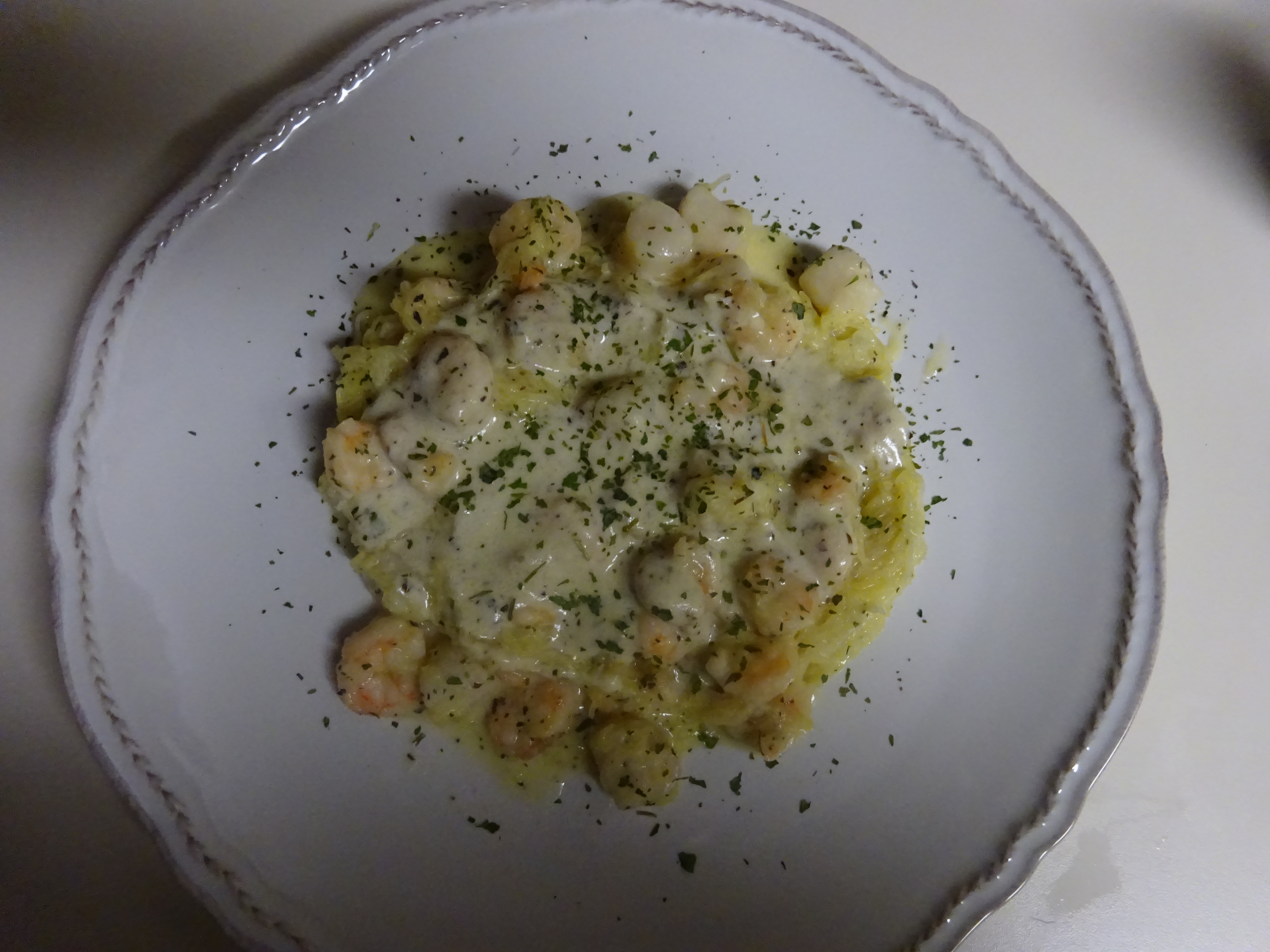
– Assemble the dish either in the bowl, or on a plate. Garnish with dried parsley and if you desire, cheese.
DSC00153

There you have it! Rich, creamy, and everything you ever wanted.

Have any questions? Tips? Let me know in the comments below! I hope you enjoy this and much as I did.

xoxo,
Paige

Cashew Milk/Cashew Cream

Rookie mistake. In true newbie fashion I gave you guys a recipe that called for something I hadn’t given a recipe to. While you could have googled “homemade cashew milk,” I figured I’d just post a recipe here.

I like cashew milk because not only is it creamy, but it’s incredibly easy to make and you don’t have to strain it. Sounds a little too good, huh? Trust me, it’s real and it’s delicious. Also, cashews can get a bit expensive, so I also like that there isn’t anything that goes to waste. You get all the goodness and nutrition of a cashew in a convenient drink!

In this recipe, I also included the method for cashew cream which is a great replacement for traditional heavy cream if you’re making creamy soups. I love to use it as a thickener in my soups! Once you make it, you’ll see just how easy it is! When I first tried it, I was very surprised at the neutral flavor.

To make this happen, you’re going to need a high-powered blender.

Cashew Milk/Cashew Cream
Ingredients
– 1 cup of raw cashews
– water
that’s literally it

Method
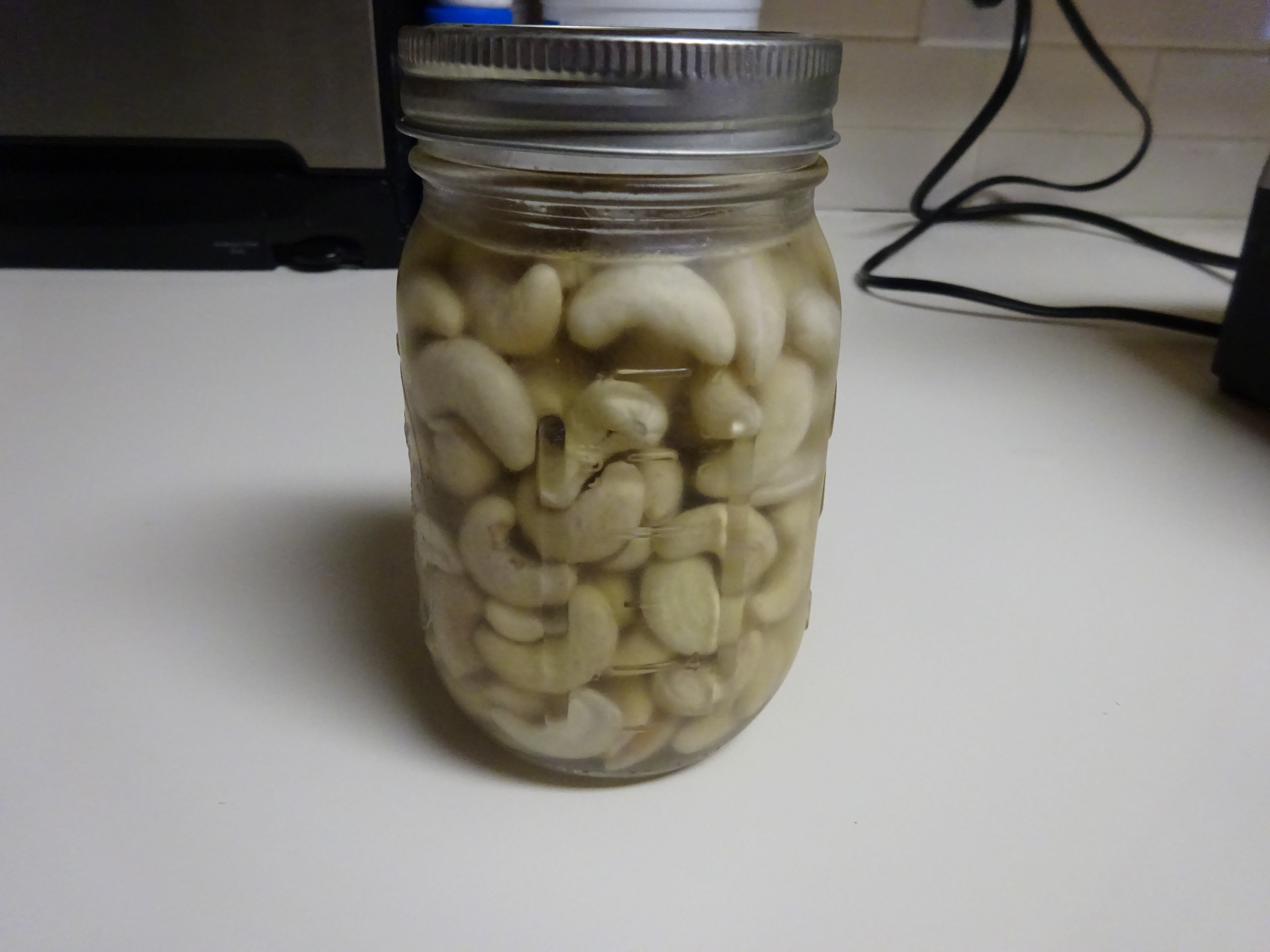
– Soak 1 cup of raw cashews in water overnight. Alternatively, you can boil some water and pour it over the cashews and let it sit for 30-45 min.
DSC00127

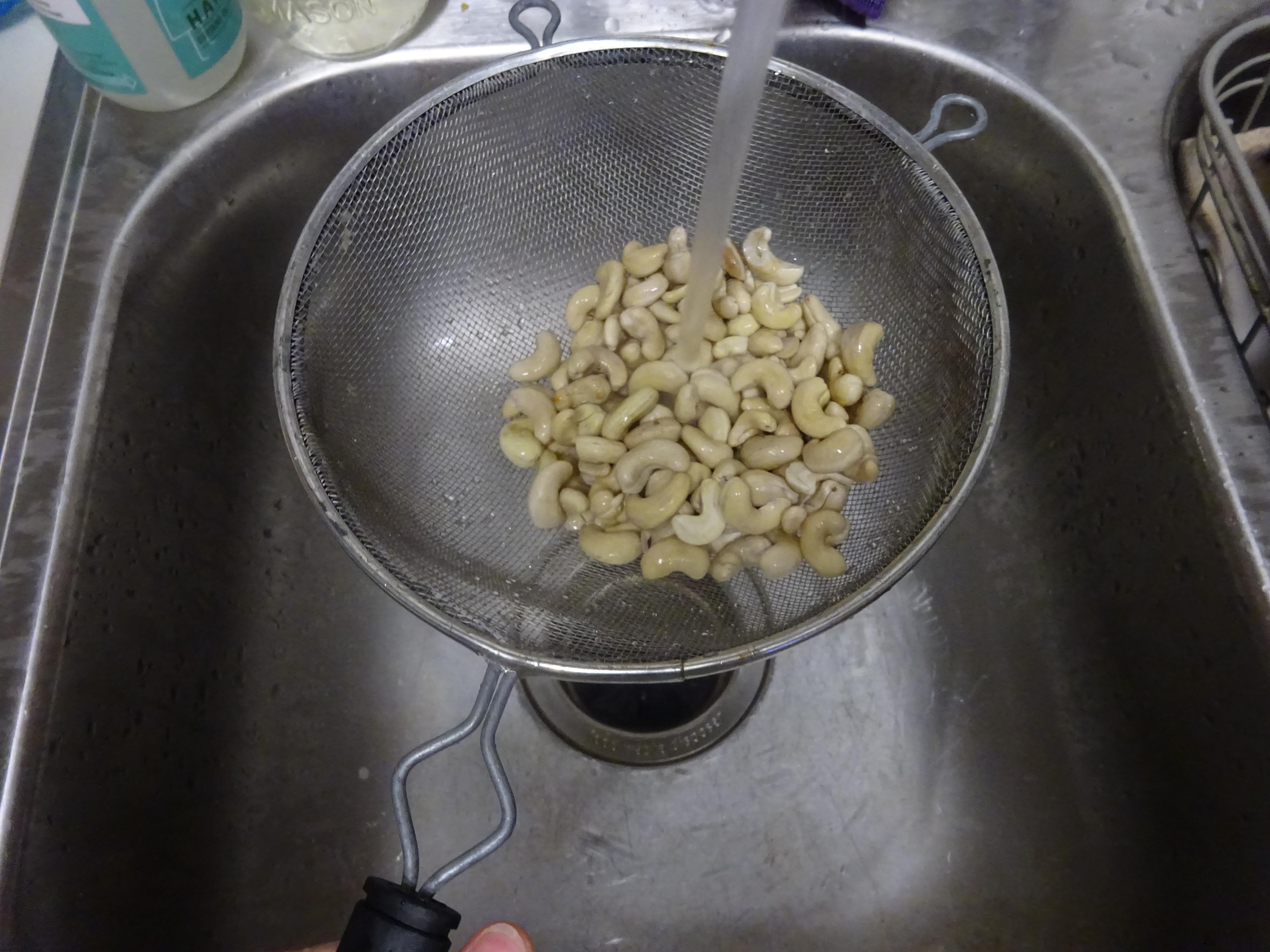
– Once you’ve soaked your cashews, rise them off under some cool water like so
DSC00128

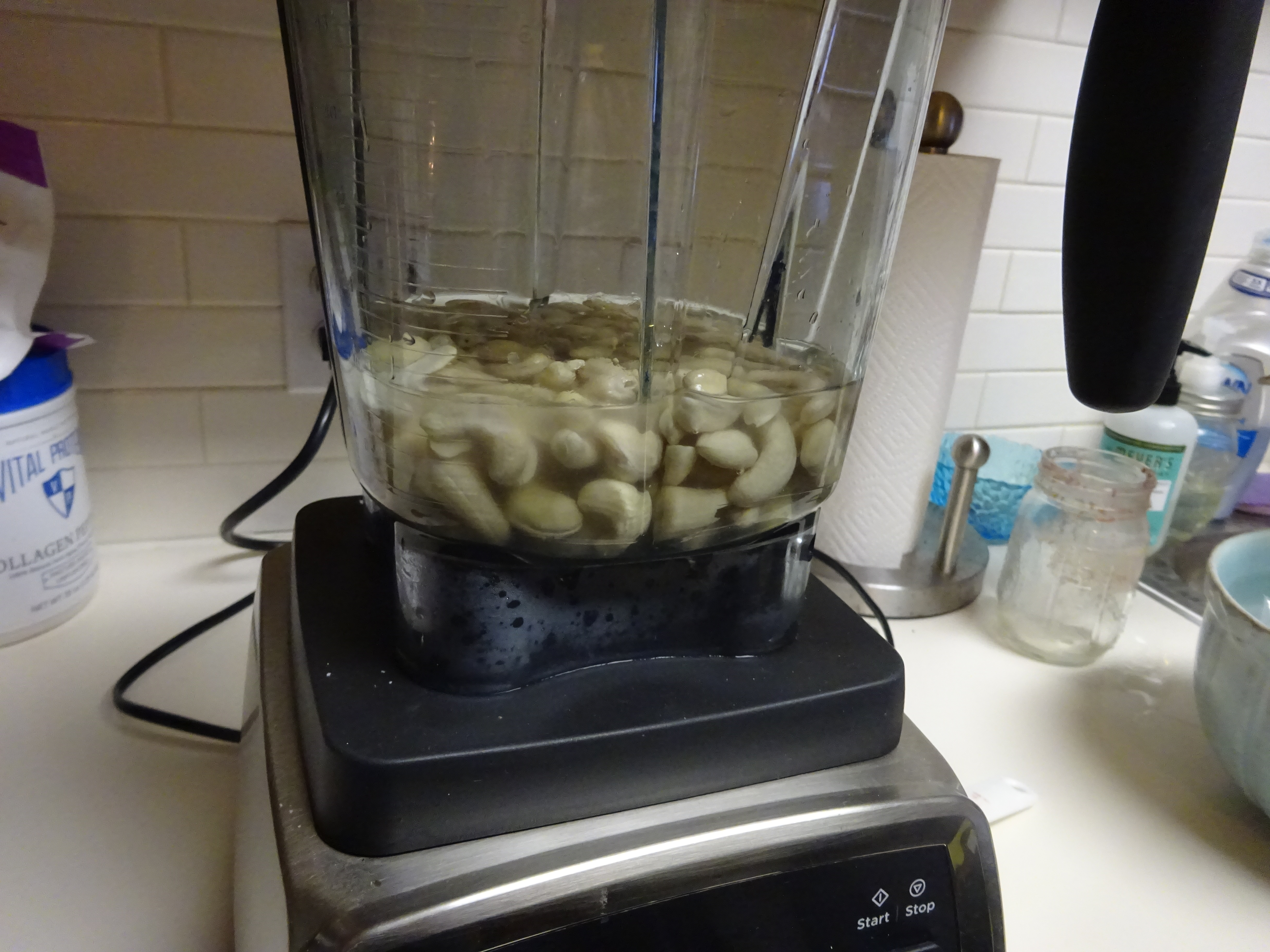
– Place the cashews into your blender and add about a cup of water.
DSC00129

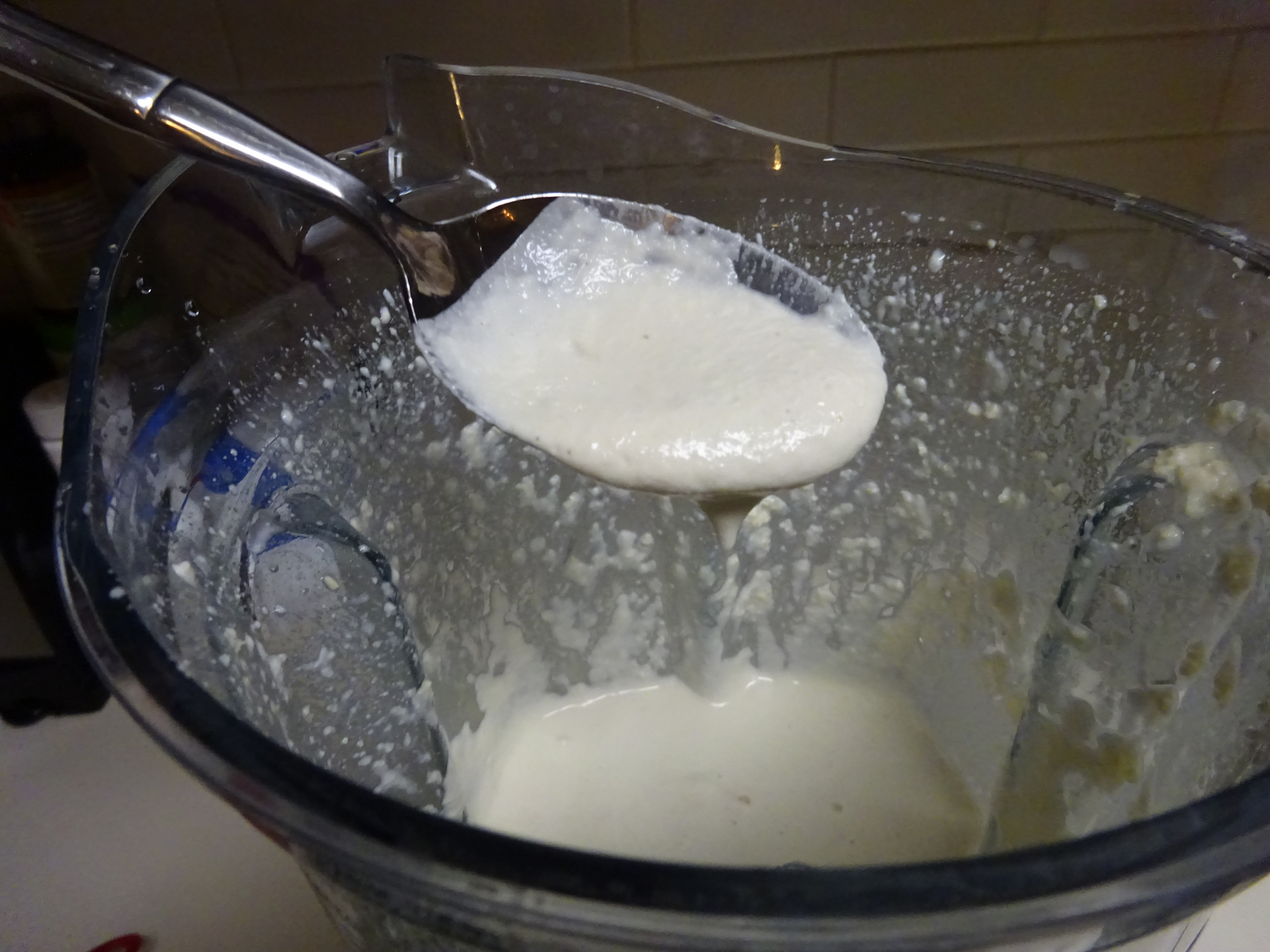
– Blend, blend, blend! It’s going to turn into a really creamy substance. If you’re making cashew cream, stop here. If you find it to be a little too thick, add a little bit more water and blend, anywhere from 1/2 and tablespoon to 1 tablespoon.
DSC00131

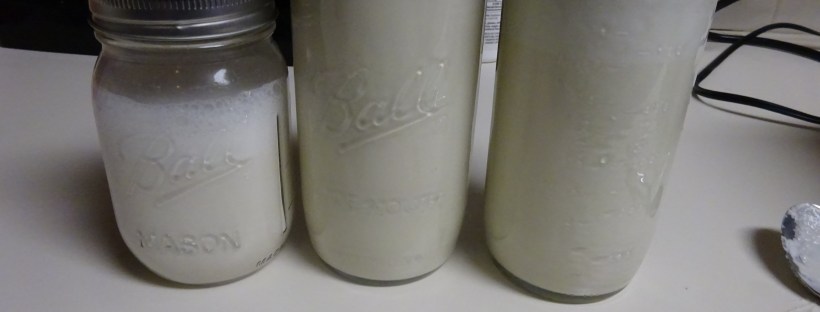
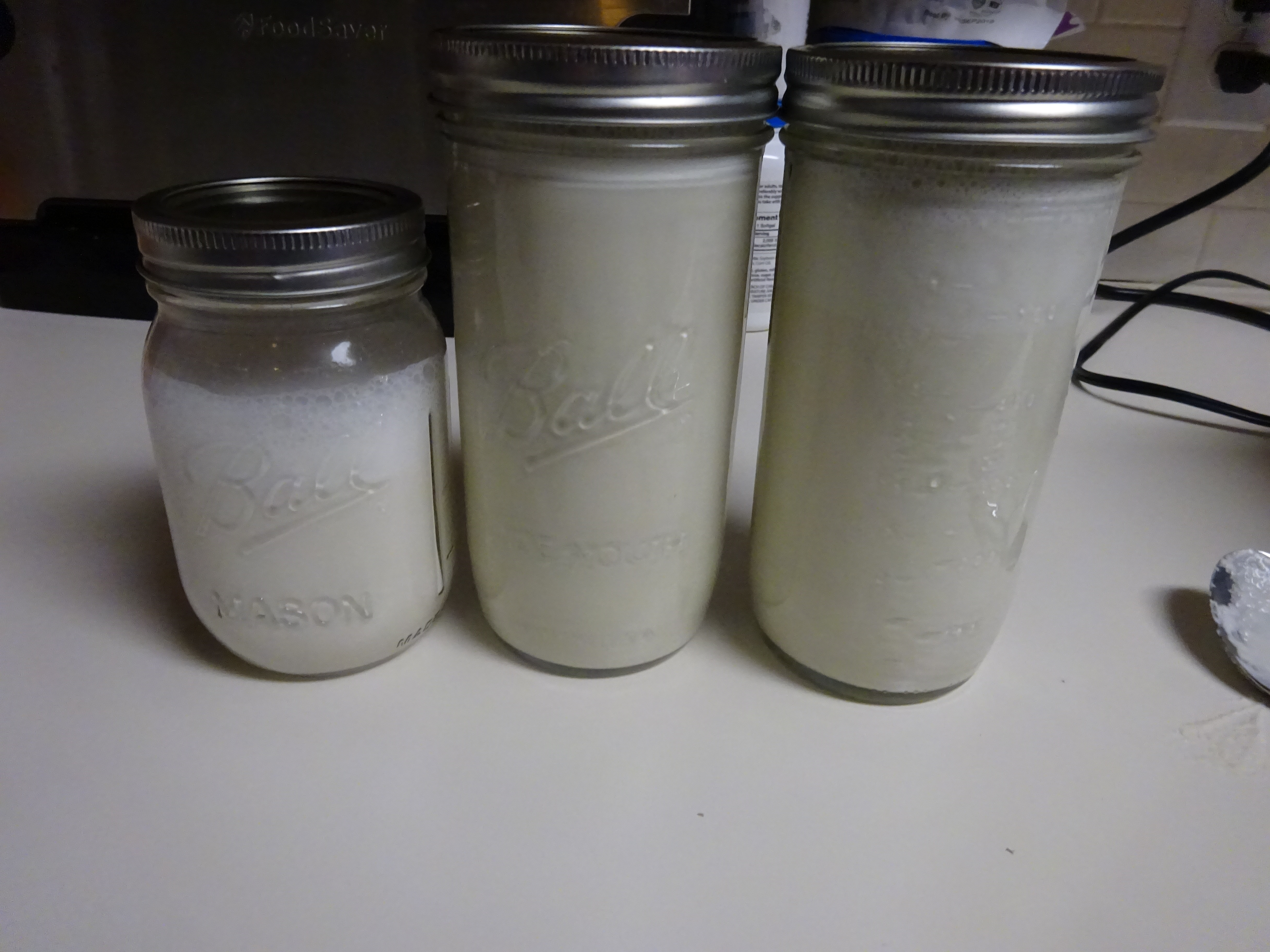
– For cashew milk, add about 4-5 cups of water. I like to keep mine unflavored, but if you wanted to add a little bit of sweetener, now would be the time. If it were me, I’d add a bit of maple syrup, vanilla extract, and/or cinnamon. This would also make a great chocolate milk with some cacao powder. Once you’ve added the water and any flavorings, blend, blend, blend on high! Seriously, just blend this stuff until you think you’ve possibly over-blended. You want to make sure you incorporate the cashews as best as you can. I usually give it about a 1-2 min. I once made this and didn’t blend enough (oops), so be sure to blend (did I mention you should blend?). You can also check to make sure that it’s well incorporated by dipping a spoon in their when the blender is off and taste it. If it’s smooth, you’re finished!

– Once you’ve blended, add the cashew milk to airtight containers. It should be good for 3-5 days. If you find that your blender didn’t do the job to your liking, you can strain it with a nut milk bag. If you don’t own one, I have this oneand it’s incredible!
DSC00132

You’ll find a lot of great uses for cashew milk! Add it to your coffee, drink it straight-up, make my Cashew Hot Chocolate, or use it in sauces!

Hope you love this as much as I do!
xoxo,
Paige

Cashew Hot Chocolate

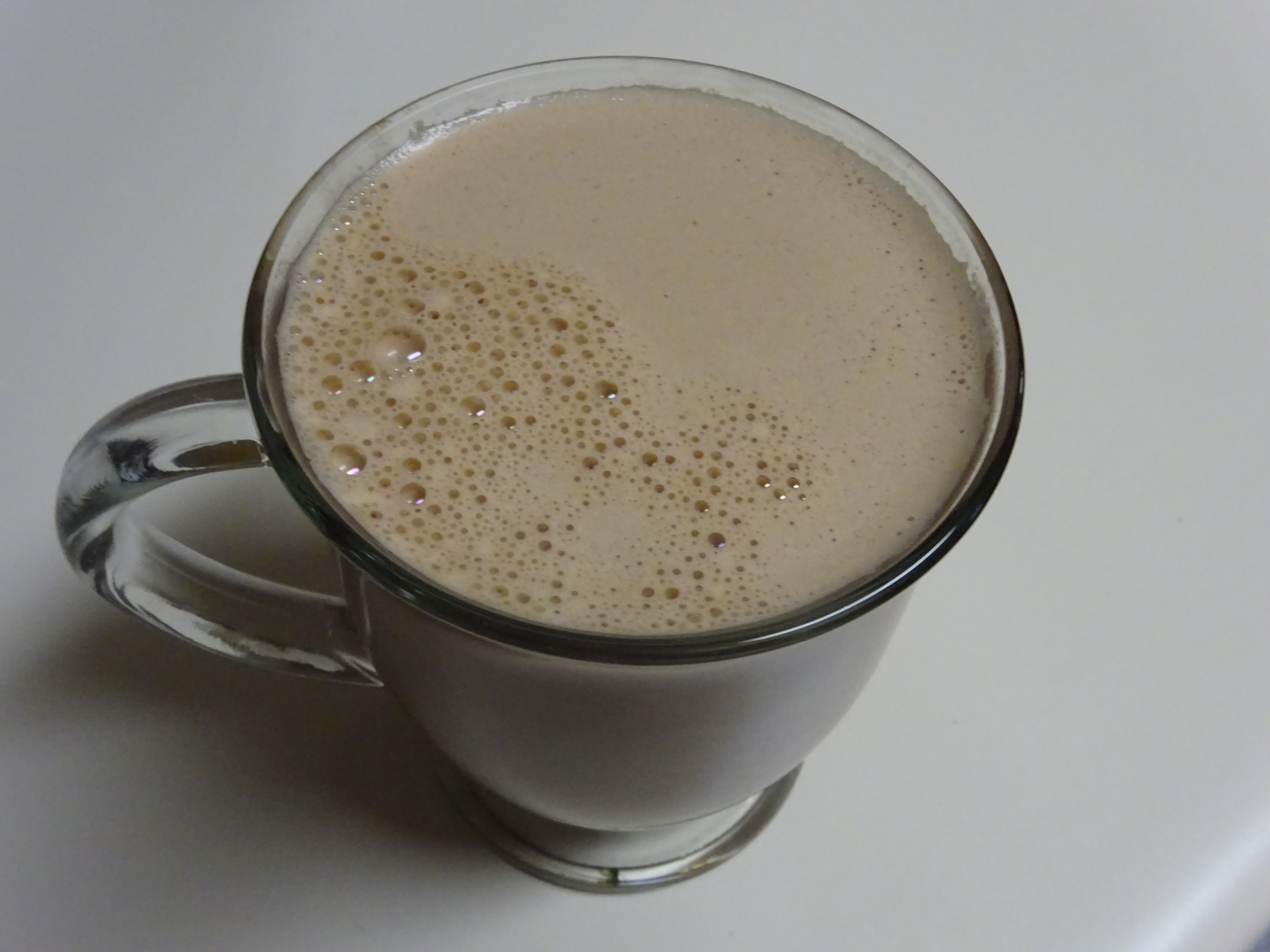
Good morning! As my first recipe, I wanted to share something I’ve discovered that I absolutely love. I call it Cashew Hot Chocolate, but really you can use any type of nut milk that you like. To keep it fresh, I usually switch between homemade cashew milk and homemade almond milk – which I am happy to post recipes for! If you’ve never tried cashew milk, you’re really missing out.

This drink was inspired by buttered coffee. Personally, I love coffee, but sometimes it can make my stomach feel a little off. I try to limit my coffee intake to just two mornings a week (but coffee is really good for you, so don’t feel like you can’t have it all the time). So on the other five mornings of the week, what am I supposed to drink?! Cashew Hot Chocolate – seriously, you’ll love it. With the energy boosting power of MCT, healthy fats from grass-fed butter and coconut oil, and trace minerals from Grade B maple syrup, this is sure to become one of your favorite morning drinks. Hope you enjoy!

DSC00122
Cashew Hot Chocolate
Ingredients
– Cashew milk or your favorite nut milk
– 1/4 teaspoon vanilla
– MCT oil (as much as you can tolerate, this is different for everyone. If you have never used MCT before, stick to 1 teaspoon)
– 1 tablespoon coconut oil
– 1/2 to 1 tablespoon of unsalted grass-fed butter (I like Kerrygold)
– 1 to 2 teaspoons of Grade B Maple Syrup (add more or less depending on how sweet you like things)
– 1 1/2 tablespoons of cacao powder
– scoop of collagen powder if you have it

Method
– In a mug, pour the cashew milk into it leaving a bit of space. If using cashew milk, add a bit of water to thin it out, unless you’re a fan of the creaminess.
– Heat in the microwave for 2 min. Alternatively, you can heat this on the stove, but it’s in the morning and I don’t have the time for that.
– Remove mug from microwave and pour the hot cashew milk into either a blender or a larger cup, I use the measuring beaker (apparently that’s the name for it) that came with my immersion blender. You just want something bigger than the mug.
– Add all of the remaining ingredients into the cashew milk.
– Blend the ingredients until well incorporated, about 30 seconds.
– Pour back into the mug and enjoy!

This process takes less than 5 min and is a perfect replacement for coffee! Let me know how you like it! Feel free to play with the flavors – this would be wonderful with a dash of cinnamon or a little bit of peppermint extract.

About Me!

10666068_10155202174260451_8099086257443451984_nHello! You can find a summarized version of my “about me” in the “about” tab, but I wanted to go into more detail about myself, my journey, and why I love my lifestyle.

For starters, I’m Paige. I am a current student at the University of Texas here in Austin, Texas. My major is Corporate Communications with a minor in Rhetoric and Writing. I’m from a small town, so living in such an incredible city and attending a large school has been quite the adventure – but more on that later.

I wanted to start this blog to document not only my health progress, but to also post the recipes I make. I want to show other college students and young adults that it IS possible to live this lifestyle. I want to show people that health is possible.

To get into my health journey: I was never very “sickly” when it came to conventional illnesses one gets growing up. I only ever had strep once, I’ve never had the flu, and I rarely missed school for other things along those lines. However, I had my own set of difficulties, which started in 2nd grade with migraines (yes, 2nd grade). I have pretty vivid memories of going to the nurses office to take Children’s Motrin – I particularly liked the grape flavor for whatever reason. As I grew older, I was put on beta blockers to prevent migraines, as well as Maxalt (bless that med) for when I had a migraine. When the beta blockers stopped working and I hit puberty, I was put on birth control to manage migraines and anti-seizure medication. I hated the anti-seizure meds, they really messed with my sleep patterns and make me feel a little off, so much so that I just stopped taking them to prevent my migraines.

On top of my migraines, I later developed sever abdominal pains. These episodes would last for hours and were debilitating – I often couldn’t walk and would just stay in bed with pain. Imagine a huge ballon in your stomach expanding, but it never pops. These landed me in the ER a few times, where I was never told anything about why these things were happening and they sent me home. I also had a number of inflamed lymph-nodes in the back of my neck, always the same one – on the back left of my neck.

I’d been tested for a number of illness before discovering one of the huge factors in all my discomfort – gluten. I was 18 when I found out I had a gluten allergy. It didn’t make sense to me until I had my first plate of gluten-free pasta: for the first time in my life, I was not in pain after eating pasta. I sincerely thought that everyone felt as horrible as I did after eating pasta. Going gluten-free healed my migraines, stopped my strange abdominal episodes, and helped me gain weight – I am about 5’7″ and weighed about 110 pounds. That wasn’t okay.

Fast forward to my sophomore year of college. My health took a turn for the worst when I was having trouble remembering simple tasks. Had I eaten? Had I already washed my hair? While basic, as a 19 year old it felt very strange to just forget very basic things. I also started loosing some of my hair, experiencing pretty severe exhaustion (I was sleeping about 16 hours a day), as well as other ailments. It took about a year, but I was later diagnosed with an “undifferentiated connective tissue disease mostly resembling lupus.” So, basically, my blood-work is just really funky and all over the place, but not quite at the numbers to be lupus. My doctor told me that it would, and would, get worse if we didn’t act. I was put on 400mg of Plaquenil and told to give it 3 months before it would kick in. However, I didn’t leave without asking about changing my diet. He told me, “it couldn’t hurt” and to let him know how it went.

I chose the Paleo Diet after doing a lot of research of my own on autoimmune disease. For me, this way of eating made sense – eliminate foods that cause inflammation and decrease inflammation in the body. By adhering to this diet and taking my medication, in February 2014, I was told that I was in remission! Not only that, but my Doctor had never seen someone go from my numbers to nothing. When he asked what I did, I reminded him that I started a Paleo lifestyle to which he said, “well keep it up and you can get off your meds.” How cool is that?!

Now, in 2015, here I am completely off my medication and controlling my disease through diet and exercise. It has been an empowering experience that has shed light on just how powerful food, exercise, and lifestyle is.

With this blog, I hope to encourage others like me, post awesome recipes, and advice for anyone who is young who is either battling with an autoimmune disease, or is just trying to live a healthier life.

Welcome! Let’s keep it healthy!